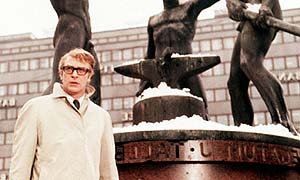

Rather than words comes the thought of high windows:
The sun-comprehending glass,
And beyond it, the deep blue air, that shows
Nothing, and is nowhere, and is endless
Philip Larkin
Filing into the chilly school hall, with its rows of austere polypropylene chairs and a pair of flaccid white balloons hanging glumly from a rafter, one was reminded of Linda in Nancy Mitford's The Pursuit of Love: "The worst of being a Communist is that the parties you may go to are awfully funny and touching, but not very gay, and they're always in such gloomy places."

From now on, Conservative-held and target seats will be expected to involve non-party members in their choice of candidates. I don't want to be too prescriptive about how constituencies do this. So we will be offering them a choice.
Option one is for constituencies to set up a panel of local community stakeholders, for example members of local voluntary groups, GPs, school governors and head teachers, local business leaders, and local police officers.
These community panels will interview the candidates from the priority list chosen by the local association, and will report to the association on the relative strengths of each candidate.

The Democratic Party and the endeavor of writing American history have a problem in common.
In a recent article, "Reconsidering Bush's Ancestors," published in the New York Times Magazine, [Sean] Wilentz makes explicit the implicit politics of his historical interpretation. Reading history backward, he defines today's Republicans as the direct descendants of the now long-forgotten Whig Party of the 1830s and 1840s. The alternative to the Democrats in the years before the Civil War and the creation of the Republican Party, the Whigs—like today's GOP—clashed sharply with the Democrats on both the size of government and the shape of American foreign policy. For Wilentz, "the blend of businessmen's aversion to government regulation, down-home cultural populism and Christian moralism that sustains today's" Bush Republicans is but a continuation of the political formulas first laid out by the Whigs.
Church creative director Mike Robertson describes the goals as "radical" and "audacious," a set of initiatives that will use storefront satellite spaces, artistic events and small groups to foster relationships with the unchurched and establish Riverbend as an integral part of Austin.
"I want to get out in the community because of the hope we have to offer," says Carlton Dillard, associate pastor of creative arts. "In the culture we live in, I firmly believe a lot of folks won't come into the four walls of the church."
Riverbend leaders are planning a 40-day vision kickoff in January with billboards, bumper stickers and T-shirts promoting the efforts and the new church logo.
A competition has been launched in Australia to find a new way of describing kangaroo meat.
Organisers want to find a name less offensive to diners sensitive about eating a national symbol.

Liberace is not only a Las Vegas legend: his humour and rightful title as the original king of bling place him squarely in 21st-century pop culture. Replace macho men with Liberace to pitch beer and a marketer has struck a demographic goldmine.
Einstein was one of the first "celebrities" to use his fame for social good. Marketers have a rich cultural and social legacy to draw upon.
Retro invites us to curb—nay, nail firmly to the ground—every sophisticated, urban, cosmopolitan impulse we have. Retro food delights with its anachronistic humour. It reminds us of Aunt Mabel, polyester, poodle skirts, and fake blue Christmas trees. It works because it strokes the bones of humour. And Lord knows, where is the humour in food anymore?
Consider the homely Jell-O salad. Now there is a creation bent on amusement. The thing moves. It jiggles. It attempts to ensconce earthy vegetables in sugary gelatinous suspension. There is nothing serious about a Jell-O salad. To serve one, in this day and age, is to keep one’s tongue planted firmly in one’s cheek.
When it comes to collecting retro holiday decorations, one buzz word could be the one whispered into the ear of a confused young man in "The Graduate" - plastics.

During the holiday season, moviegoers can catch remakes of films like "Fun with Dick and Jane," "King Kong" and "Pride and Prejudice." Now, fans of the small screen can watch a remake too, of a television commercial widely considered one of the funniest ever made.
Bayer and its agency, BBDO Worldwide, have re-created a 1972 spot for Alka-Seltzer known as "I Can't Believe I Ate the Whole Thing," for the plaintive cry from a gourmand husband that opens the commercial. The phrase, and a variant, "The whole thing," went on to enter the baby-boomer vernacular.
A campaign in early 2006 will include packages of Alka-Seltzer with a "retro" design
Stars and Stripes is a daily newspaper published for the U.S. military, DoD civilians, contractors, and their families. Unique among the many military publications, Stars and Stripes operates as a First Amendment newspaper, free of control and censorship. We have published continuously in Europe since 1942, where readers currently number around 80,000. We serve about 60,000 readers in the Pacific, where we have published a daily paper since 1945.*
Stars and Stripes maintains news bureaus in Europe, Pacific and the Middle East to provide first-hand reporting on events in those theaters. In addition to news and sports, our daily paper contains all the elements of the hometown paper our service members left behind, from "Dear Abby" to coupons, comics and crossword puzzles. In all, we publish five editions: Mideast, Europe, Japan, Korea and Okinawa.
Iraq's National Integrity Day suggests new era after years of corruption
By Anita Powell, Stars and Stripes
Mideast edition, Saturday, December 10, 2005
BAGHDAD — After decades of being forced to celebrate a deeply corrupt regime, national officials have declared a new national observance: National Integrity Day.
As the name suggests, the holiday, set for Dec. 9, celebrates integrity but also the achievements of the Iraq Commission on Public Integrity, an independent government organization that seeks out and investigates government corruption.
National officials ushered in the new holiday Thursday with a lively celebration at the Baghdad Convention Center, a place once off-limits to all but Saddam Hussein’s closest cronies.
"Jews pioneered Hollywood. If, as our enemies say, we own Hollywood, well, here's the plot twist - we have lost Hollywood, and we have lost Spielberg. Spielberg is no friend of Israel. Spielberg is no friend of truth. His Munich may just as well have been scripted by George Galloway."
But there is a connection between Flashman and Thatcher, and it may surprise you to learn that the connection is me. Here, I think, is how it came about.
In the summer of 1982, when Margaret Thatcher had been in power three years, I wrote a review of the then latest Flashman novel, Flashman and the Redskins, for the weekly journal New Society - now, alas no more.
In it, I pointed out that one of the explanations for the appeal of the Flashman books was that they subverted 19th-century pretensions in our own day as successfully as Lytton Strachey had subverted them in his time with Eminent Victorians, published in 1918.
In depicting the 19th Century in this way, I suggested the Flashman saga "took the lid off Victorian values", and it was under that very headline that the review was eventually run.
A few weeks afterwards, I received a letter from Matthew Parris, who told me that Margaret Thatcher had greatly enjoyed reading my essay. Six months later, in January 1983, she began talking publicly and admiringly about Victorian values, and about what she meant by them, and she continued to do so until the general election that was held in May of that year, which, of course, she triumphantly won.
London was a frequent starting point for Grand Tourists, and Paris a compulsory destination; many traveled to the Netherlands, some to Switzerland and Germany, and a very few adventurers to Spain, Greece, or Turkey. The essential place to visit, however, was Italy.
The Grand Tourist was typically a young man with a thorough grounding in Greek and Latin literature as well as some leisure time, some means, and some interest in art.
It was 25 years ago that Mr. Paucton got the idea of keeping bees on the roof of the Opera, where he worked in props, after talking to a member of the in-house fire brigade who was raising fish in the basement (don't ask ...).
"This is one of the most brutalized digs in Italy. The tomb raiders are here almost every day," he said, looking across the arid site in the Puglia region in Italy‘s heel.


Former German chancellor Gerhard Schroeder landed a job Friday as board chairman for a Russian-German gas pipeline that he championed while in office, a post that deepens his already close relationship with the Russian government and President Vladimir Putin.
A Gazprom official, who spoke on condition of anonymity, said the job was not a quid pro quo. "This position is not related to any kind of favor on our part," the official said, saying that Schroeder was such an important figure that he was never going to have trouble finding a job.
"The name has been changed to `Indian'. Signifying continuity with change, the new look communicates a bold, striking, progressive and distinctive image for the airline,"
Putting the wheel of Sun temple at Konark on the body of aircraft, symbolising timeless motion, Indian Airlines today changed its half-a-century old name and identity

"Films are far better at bringing people together than elections, which people approach like medicine," Werbach said on the phone from his San Francisco office. "Instead of being preachy and didactic, however, they must, first of all, be entertaining."
"regarded as a way of sidestepping a risk-averse Hollywood establishment and getting the message out."
Palo Alto-based SRI International Inc. has won a $8.6 million contract from the Defense Advanced Research Projects Agency to help develop the next-generation language translation software that can quickly and accurately translate and sort print, radio and television programs coming from the Middle East and China into useful data for the various American intelligence agencies.
santa in Arabic means wart, arse in Turkish means violin bow, and purr in Scottish Gaelic means to headbutt.
The Meaning of Tingo, which is shaping up to be this year's essential stocking filler. It's brilliant in its simplicity, being nothing more than a collection of odd and interesting words from around the world, such as gorrero (Spanish, Central America) meaning a person who always allows others to pay, or pu'ukaula (Hawaiian) meaning to set up one's wife as a stake in gambling, or koro (Japanese) the hysterical belief that one's penis is shrinking into one's body.
Beijing - An extract from a speech by US President George W Bush is being used by authorities in the Chinese capital Beijing to test the English of leading officials in the run-up to the 2008 Olympics, state media said on Sunday.
"This exam tests not only the language level but also everyone's international perspective," said Zhang Tiedao, deputy director of the city's research department into science and education.
The British embassy in Germany has launched a new website for the 2006 World Cup that includes translations of football phrases such as "he was sick as a parrot" for English fans travelling to the tournament next summer.
Some of the translated phrases include "Ihm war kotzuebel" (He was sick as a parrot), "Er kotzte wie ein Reiher" (He puked his guts up) and "Wembley-tor" (Wembley goal), which refers to the controversial 1966 World Cup final extra time goal by Geoff Hurst when England beat West Germany.
As more consumers get their news from electronic sources and advertising follows them, analysts warn that newspapers elsewhere — already losing an average of more than 2% of their subscribers yearly — might join the Chronicle in a steepening fall.

It would be strange, during an epoch when the absolutely most popular artform, cinema, is a picture-book, if the poets did not try to create images for the thoughtful and more sophisticated souls, who will not be content with the filmmakers' clumsy imagination. The movies will get more sophisticated, and one can foresee the day when the phonograph and the cinema will be the only recording techniques in use, and poets may revel in a liberty hitherto unknown.
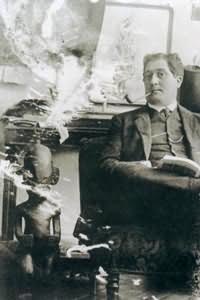
The practical problem with such schemes—as any historian of the Cold War might have told the Bush administration’s eager beavers—is their inevitable exposure. That’s what happened decades ago, when C.I.A.-financed journalists and publications were exposed at home and abroad. Certainly that was the predictable conclusion of this misadventure, too, which relied rather heavily on the tradecraft of inexperienced and arrogant young Republican boobs at an outfit called the Lincoln Group
A Case Study in Flexibility
Lincoln Group designed and produced tens of thousands of water bottles with custom messages for the Marine Corps during a dangerous conflict. The water bottles and their messages were produced locally and distributed throughout two major metropolitan areas in support of Coalition forces. These messages, written on the labels of the water bottles, promoted friendly discourse and encouraged religious pilgrims to call a phone number imprinted on the bottle in the event they noticed insurgent or criminal activity in their area.

Indeed, "rendition" has some way to go before its definition becomes as elastic as that of "freedom" now is.

"Art invariably grows out of a period when, in general, the artist admires his own nation and wants to win its approval. . . . The greatest grow out of these periods as the tall heads of the crop."


...this year, the true meaning of integrity seemed to be of extraordinary concern. About 200,000 people sought its definition online.



In state of the art studios, producers prepare the daily mix of music and news for the group's radio stations or spots for friendly television outlets. Writers putting out newspapers and magazines in Baghdad and Kabul converse via teleconferences. Mobile trailers with high-tech gear are parked outside, ready for the next crisis.
The center is not part of a news organization, but a military operation, and those writers and producers are soldiers. The 1,200-strong psychological operations unit based at Fort Bragg turns out what its officers call "truthful messages" to support the United States government's objectives, though its commander acknowledges that those stories are one-sided and their American sponsorship is hidden.
The voice from the telescreen paused. A trumpet call, clear and beautiful, floated into the stagnant air. The voice continued raspingly:
'Attention! Your attention, please! A newsflash has this moment arrived from the Malabar front. Our forces in South India have won a glorious victory. I am authorized to say that the action we are now reporting may well bring the war within measurable distance of its end. Here is the newsflash -'
Bad news coming, thought Winston. And sure enough, following on a gory description of the annihilation of a Eurasian army, with stupendous figures of killed and prisoners, came the announcement that, as from next week, the chocolate ration would be reduced from thirty grammes to twenty.
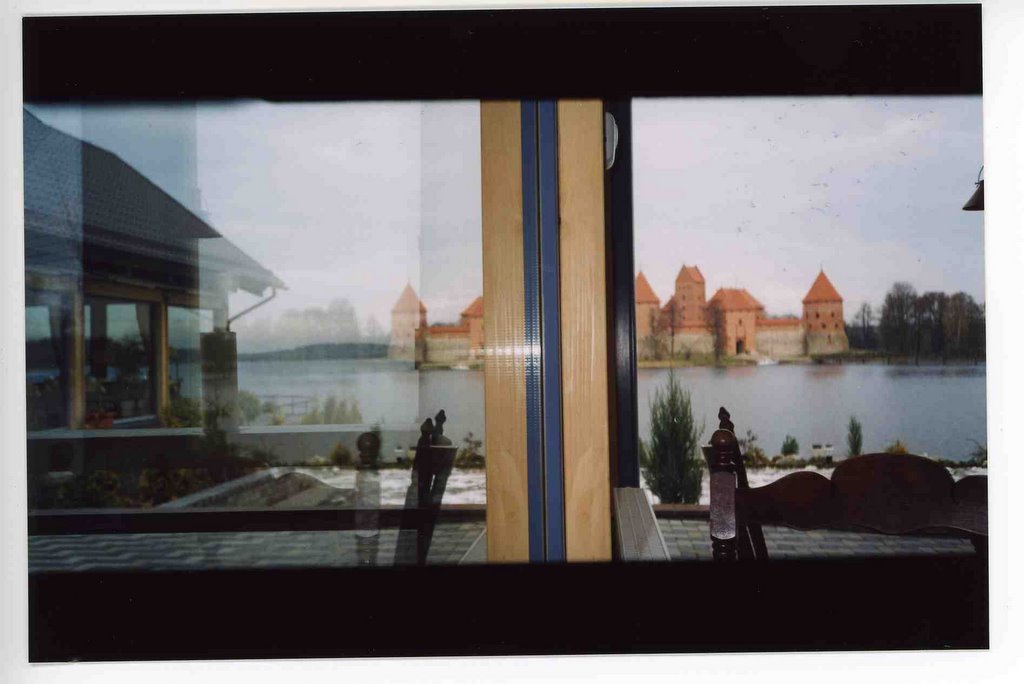


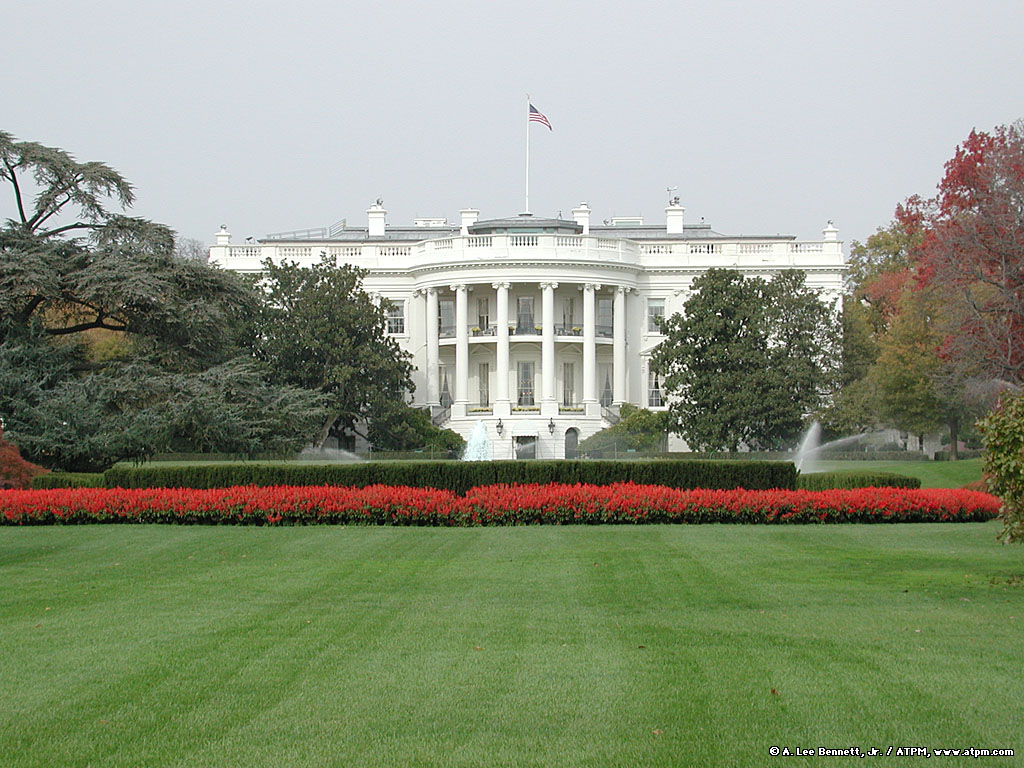
Plausible deniability is the term given to the creation of loose and informal chains of command in government, which allow controversial instructions given by high-ranking officials to be denied if they become public.